The Maldives on a Budget: Our 17-Day Local Island Adventure – Route, Experiences & Travel Tips
Local islands instead of luxury resorts: how our family of four spent 17 days in the Maldives for around $146 a day, with five islands, public ferries, whale sharks, turtles and stingrays at the beach.
Some of the links in this article are affiliate links. If you book through one of them, we may earn a small commission at no extra cost to you. This helps us keep creating travel guides. Thank you for supporting us!
Powder-soft white sand, impossibly turquoise water, stingrays swimming along the beach and sharks beneath the jetty. The Maldives turned out to be one of the most incredible places we have ever visited as a family. And the best part? We didn't spend a single night in a luxury resort.
After travelling through Sri Lanka, we started looking at flights to the Maldives. We couldn't believe our eyes when we found flights from Colombo to Malé for just $160 per person.
Until then, we had always associated the Maldives with expensive overwater villas, luxury resorts and holidays that were way beyond our budget.
But then we discovered the local islands.
And suddenly, a destination we thought we could never afford became one of the most unforgettable adventures of our travels. We spent 17 days exploring five different islands, travelled mostly by public ferry and discovered beaches and an underwater world unlike anything we had ever seen.
In this guide, we're sharing exactly how we did it, the islands we visited, our favourite experiences and all the practical tips we wish we had known before going.
Why we chose the local islands
The Maldives isn't just about private resort islands. There are many inhabited islands where local communities live, and where travellers can stay in small guesthouses and locally run hotels.
This means you can experience the same incredible turquoise ocean, white sandy beaches and beautiful marine life without paying luxury resort prices.
We spent our entire trip staying on local islands, and honestly, we would do it all over again.
Of course, there are a few differences compared to staying at a resort: no alcohol, and bikinis only at the designated bikini beaches — outside these areas you should dress respectfully and cover up.
For us, these weren't major downsides. We wanted to experience more than just a resort holiday and were happy to adapt to the local culture.
Best time to visit the Maldives for good weather
The Maldives is a year-round destination, but if you're looking for the best chance of sunshine, calm seas and clear skies, January to March is generally the best time to visit. These months fall within the northeast monsoon, which is the driest period of the year. December and April are transition months and can also offer lovely weather.
From mid-May to November, the southwest monsoon brings a higher chance of rainfall, stronger winds and occasionally rougher seas. However, don't let the term rainy season put you off completely. Tropical showers are often short and intense rather than lasting all day, with plenty of sunshine in between.
We visited the Maldives in November and experienced a mix of weather. At the beginning of our trip, we had some rain, but it usually lasted only an hour or two before the sun came back out. It never really affected our plans, and we still had an amazing time exploring the islands, swimming in turquoise water and enjoying the beaches.

Our advice: If perfect beach weather is your top priority, aim for January to March. But if you're travelling on a budget and don't mind the occasional tropical shower, the other months can still be a wonderful time to experience the Maldives. Just keep a little flexibility in your plans!
Our 17-day Maldives itinerary
We had 17 days in the Maldives and decided to visit several local islands. Each one had its own character, from fantastic house reefs and marine life to quiet villages where we barely saw another tourist.
This was our route:
- Malé → Omadhoo: 4 nights
- Dhigurah: 4 nights
- Maalhos: 3 nights
- Feridhoo: 3 nights
- Mathiveri: 3 nights
- Back to Malé: 1 night before our onward flight
1. Omadhoo – Stingrays on the beach and sharks beneath the jetty
4 nights
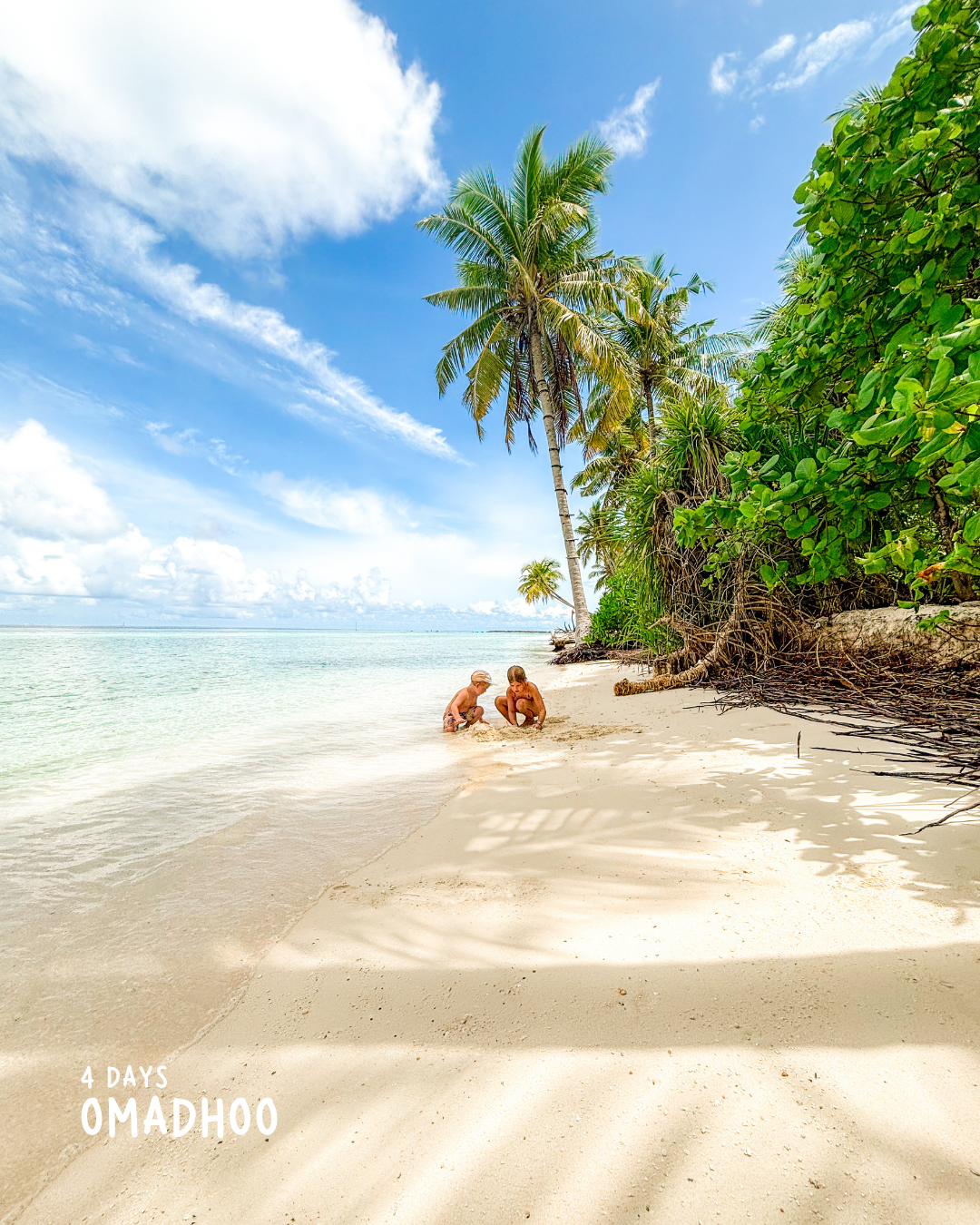
Omadhoo was our first island and an incredible introduction to the Maldives.
From the moment we arrived, we knew we had found somewhere special. White sand, unbelievably clear water and a relaxed island atmosphere. But what impressed us most was the underwater world.
Our highlights on Omadhoo:
- Snorkelling at the house reef
- Stingrays that could be spotted close to the beach
- Nurse sharks around the jetty
- A manta ray excursion
The encounters with marine life were some of our favourite moments. There is something truly special about simply stepping into the water and suddenly finding yourself surrounded by such fascinating creatures.
Where we stayed
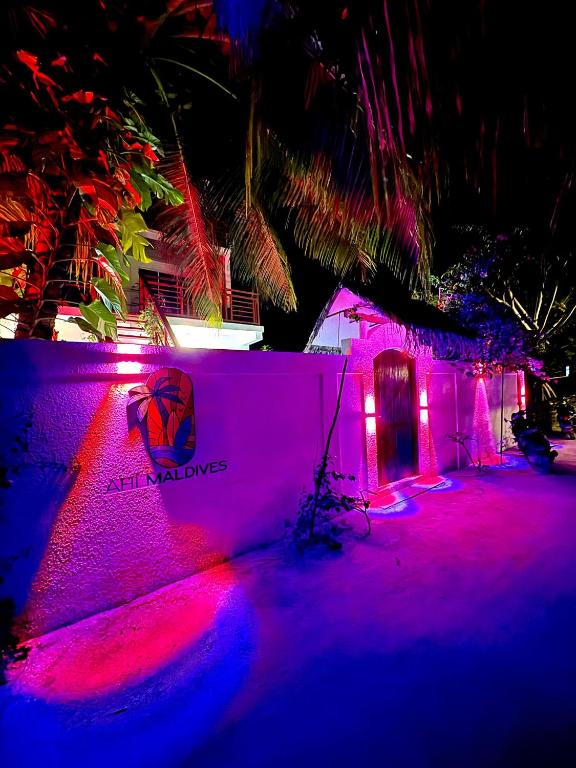
AHI Maldives
Omadhoo
2. Dhigurah – Whale sharks and endless sandy beaches
4 nights
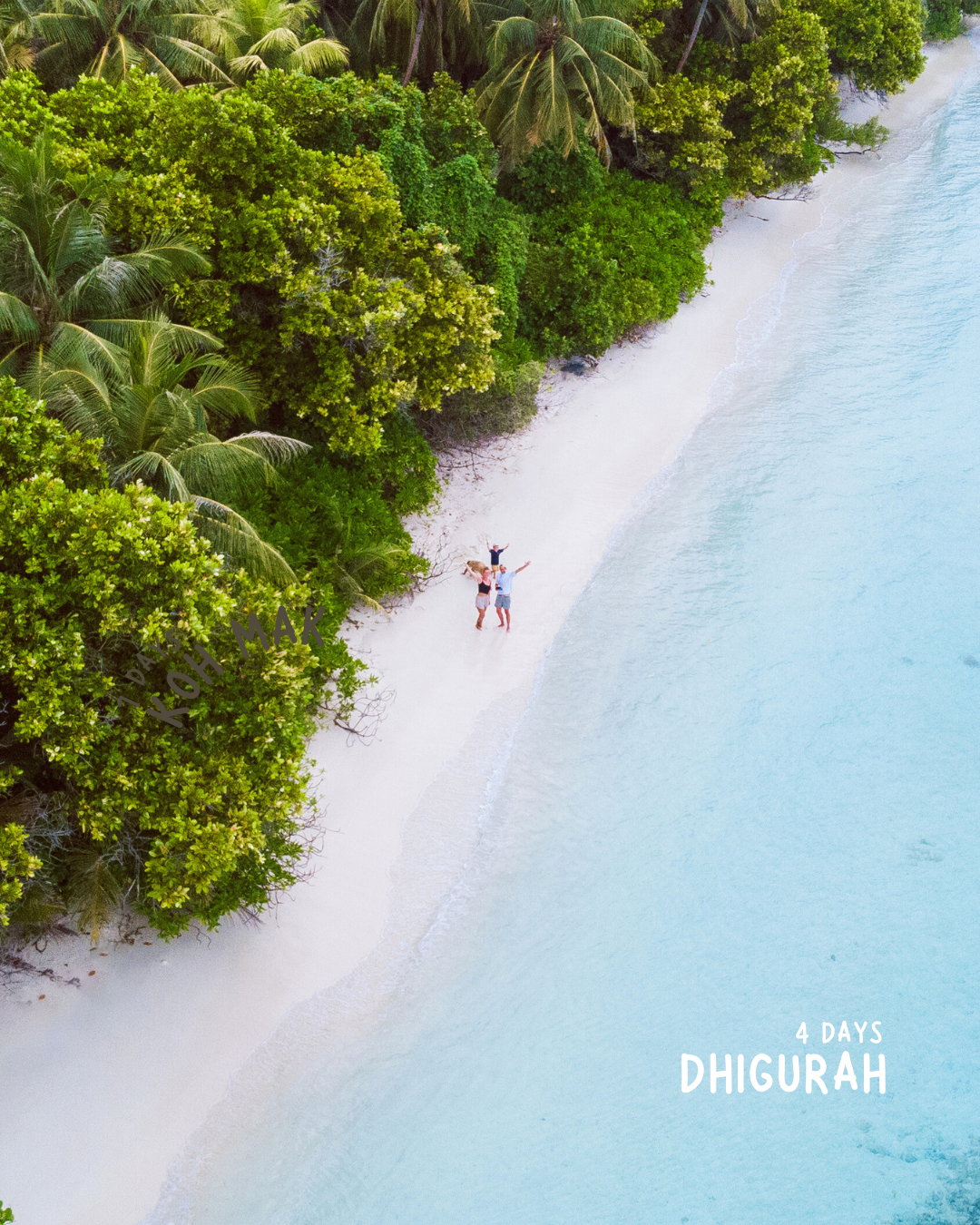
Dhigurah is famous for its long stretches of white sand and the opportunity to encounter whale sharks. It is a much longer island than many other local islands and has a beautiful tropical atmosphere.
We had planned the whale shark excursion here, but no whale sharks had been sighted around Dhigurah while we were there, so we skipped it — the tours only make sense right after the animals have been seen.
Our highlights on Dhigurah:
- Sandbank trip
- Manta ray excursion
- Long walks along the stunning beaches
The underwater experiences were once again unforgettable. We could hardly believe how much life was hidden beneath the surface.
Where we stayed
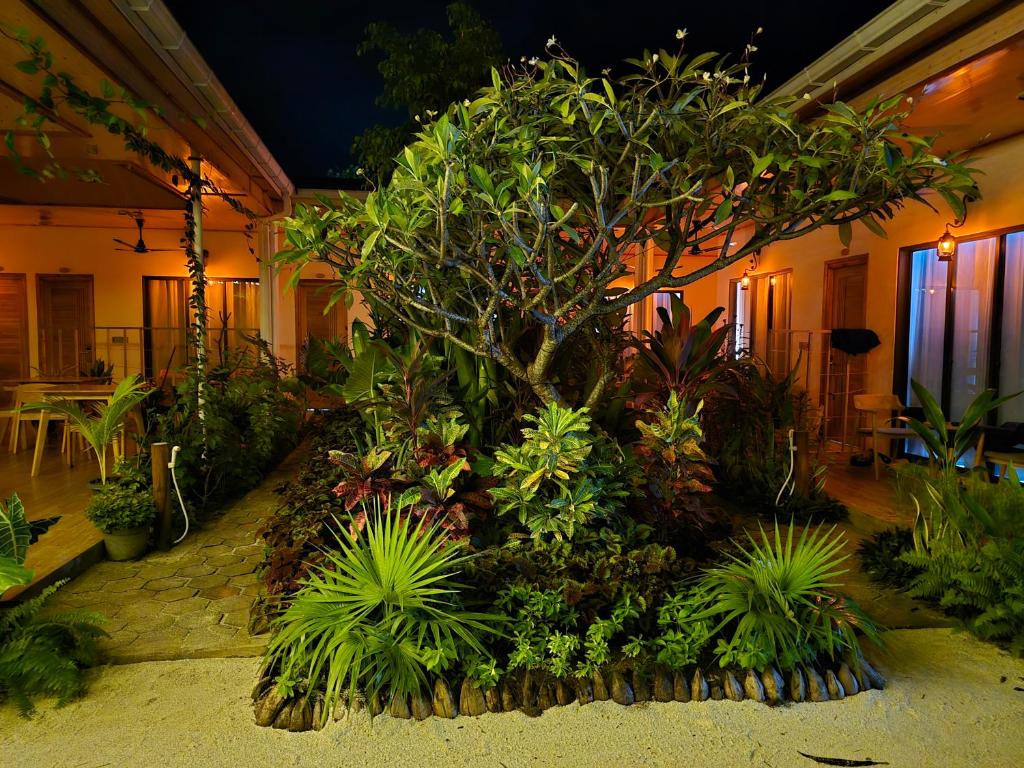
Infinity Beach Dhigurah
Dhigurah
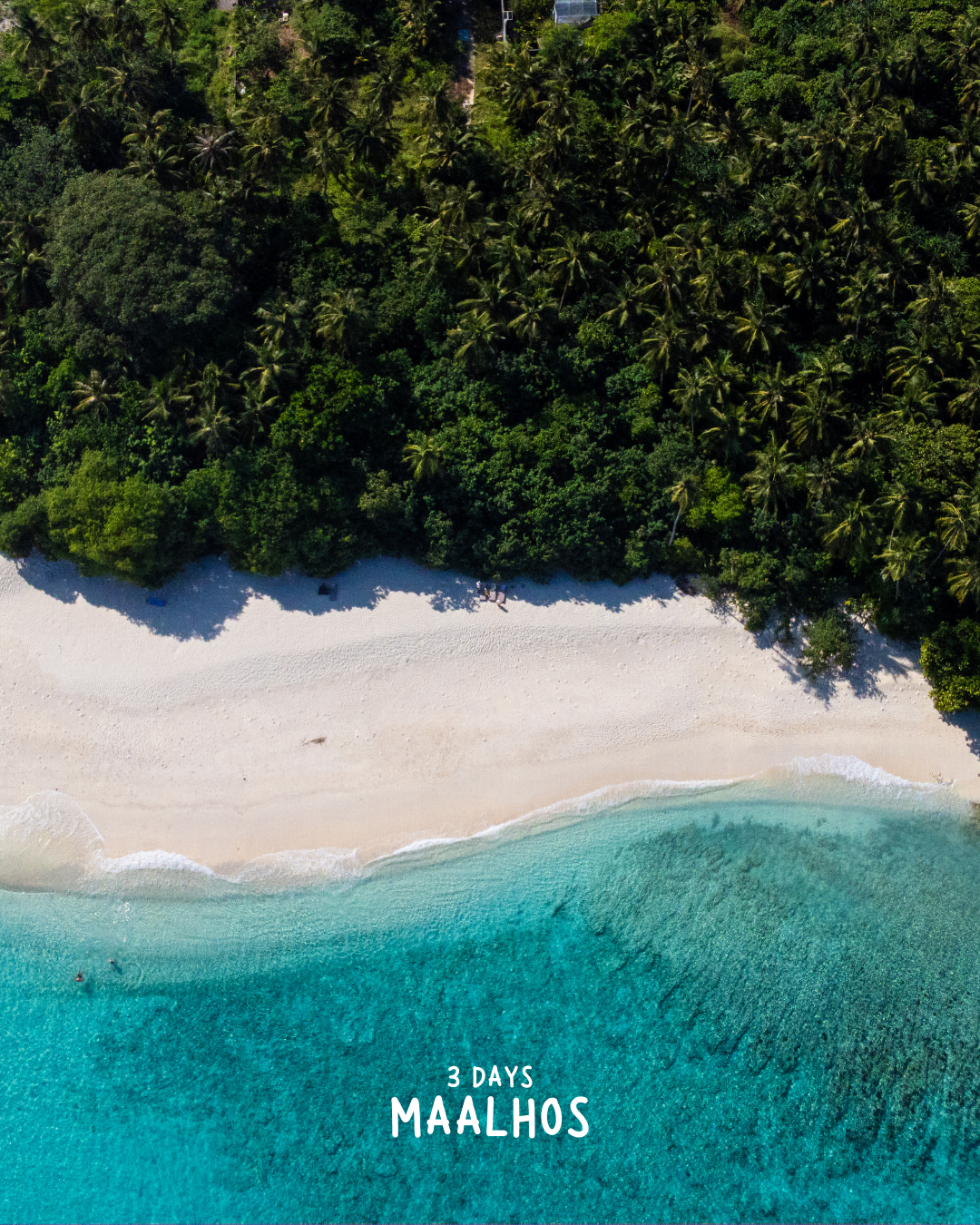
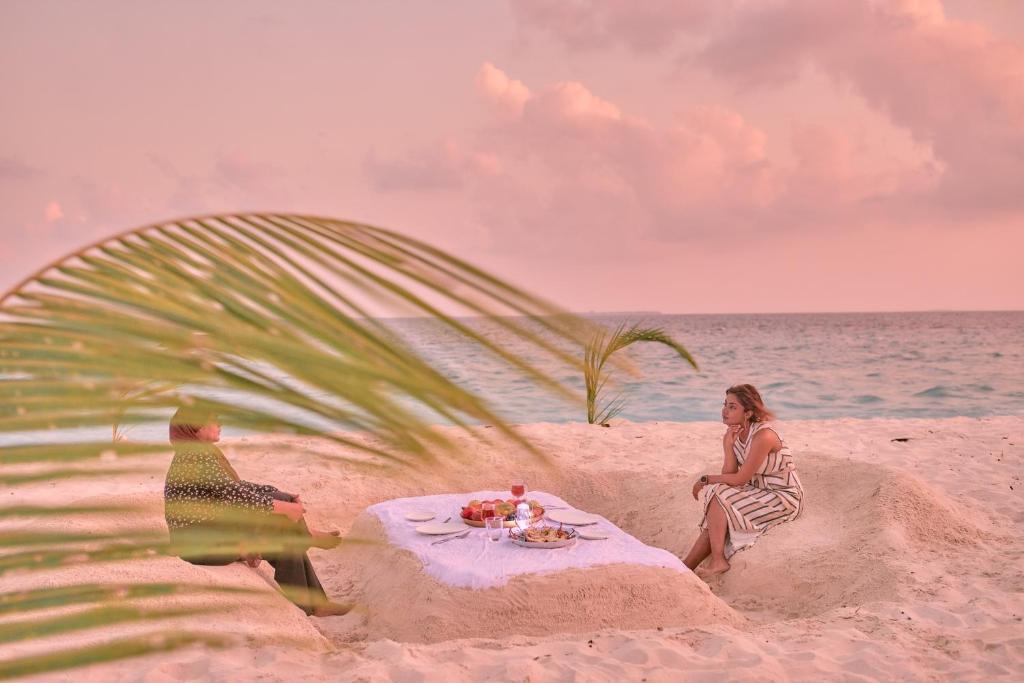
3. Maalhos – A glimpse into local island life
3 nights
Maalhos was one of the most special islands of our trip. There were noticeably fewer tourists, and we felt we got a little closer to everyday life in the Maldives.
In the evenings, we saw local women preparing fruit together outside, while men sat around the jetty fishing. These little moments often stay with us longer than any famous attraction.
The beaches were beautiful, too. Sometimes it felt as if we had the entire beach to ourselves.
Our highlights on Maalhos:
- Experiencing everyday local island life
- Almost empty beaches
- Watching fishermen at the jetty
- Enjoying the peaceful atmosphere
If you're looking for a quieter island and don't need lots of tourist facilities, Maalhos is one we would particularly recommend.
Where we stayed
Splendour Grand
Maalhos
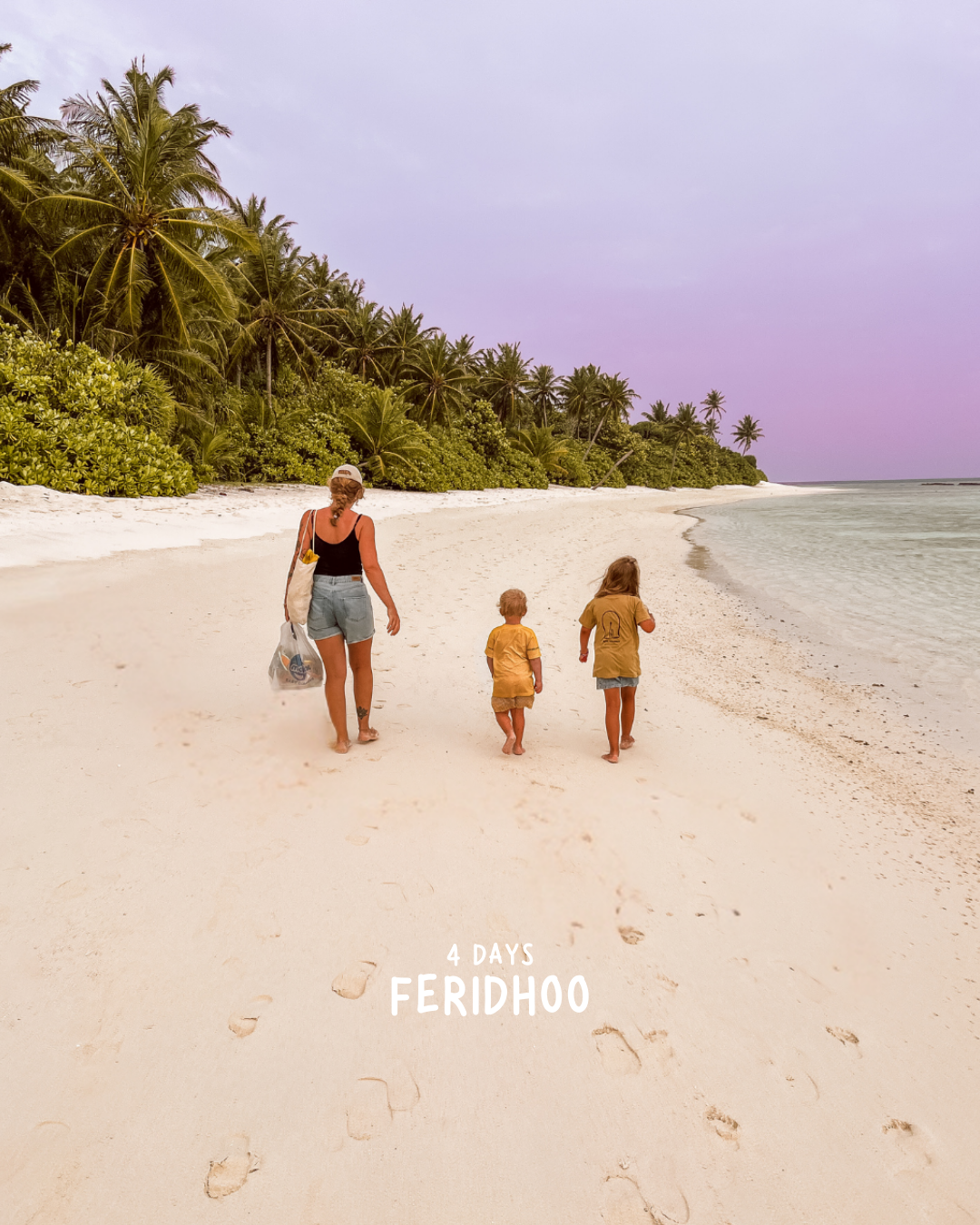
4. Feridhoo – Island vibes and turtles
3 nights
Feridhoo won us over with its relaxed island atmosphere. Once again, our days revolved around the ocean, snorkelling and simply enjoying being outdoors.
Our highlights on Feridhoo:
- Snorkelling at the house reef
- Spotting turtles in the water
- The laid-back island atmosphere
- Wandering through the village
Snorkelling was always an adventure. The underwater world of the Maldives is without a doubt one of the most beautiful we have ever experienced.

Where we stayed
AYIRA Maldives
Feridhoo
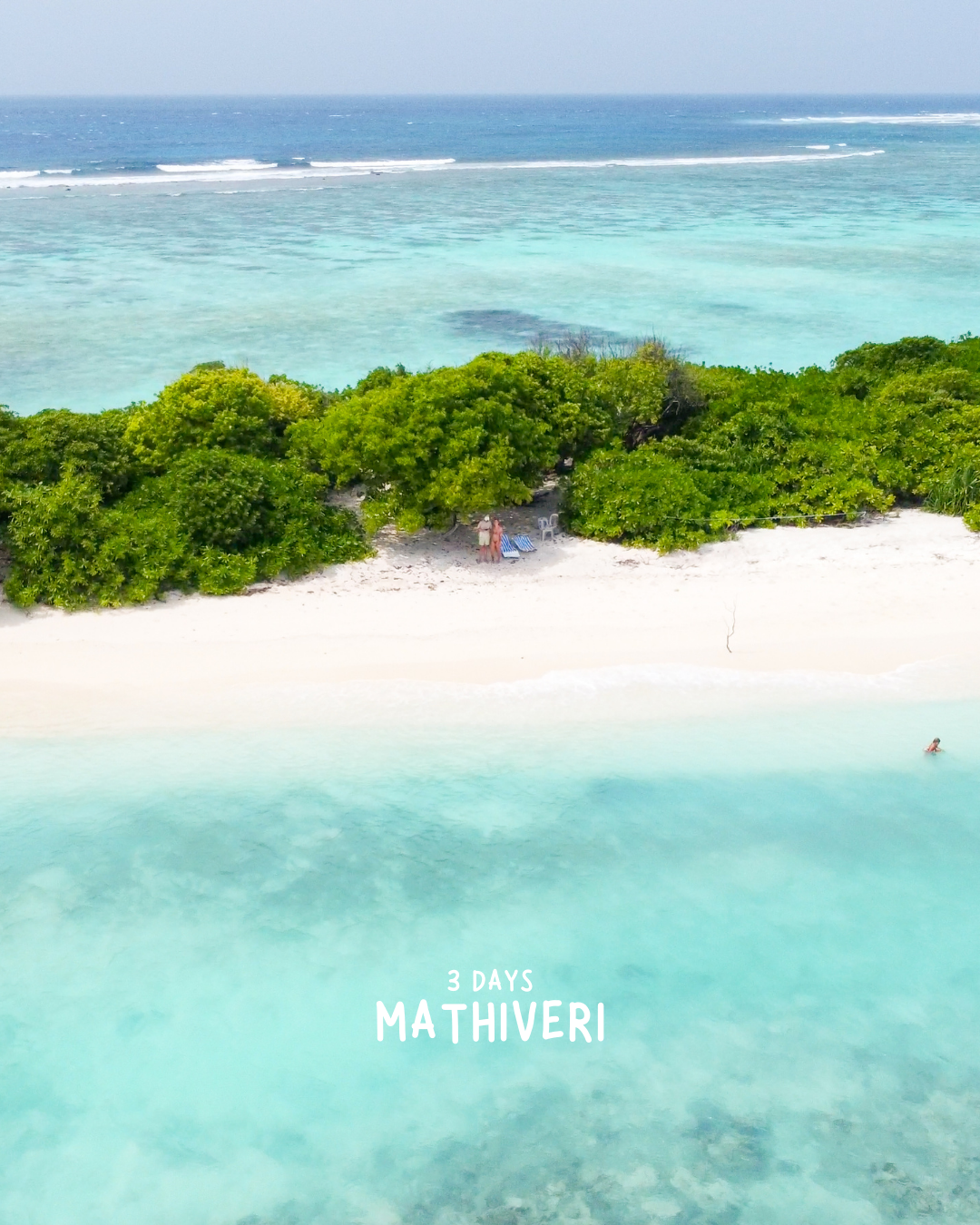
5. Mathiveri – A small island with unforgettable experiences
3 nights
Mathiveri was the final island of our route. Once again, we found beautiful beaches and exciting encounters in the water.
One of our favourite experiences was visiting the nearby Picnic Island, which you can reach by boat.
Our highlights on Mathiveri:
- A trip to Picnic Island
- Seeing nurse sharks
- Relaxed beach days
- Experiencing life on a small local island
After five islands and 17 days, it was finally time to head back towards Malé.
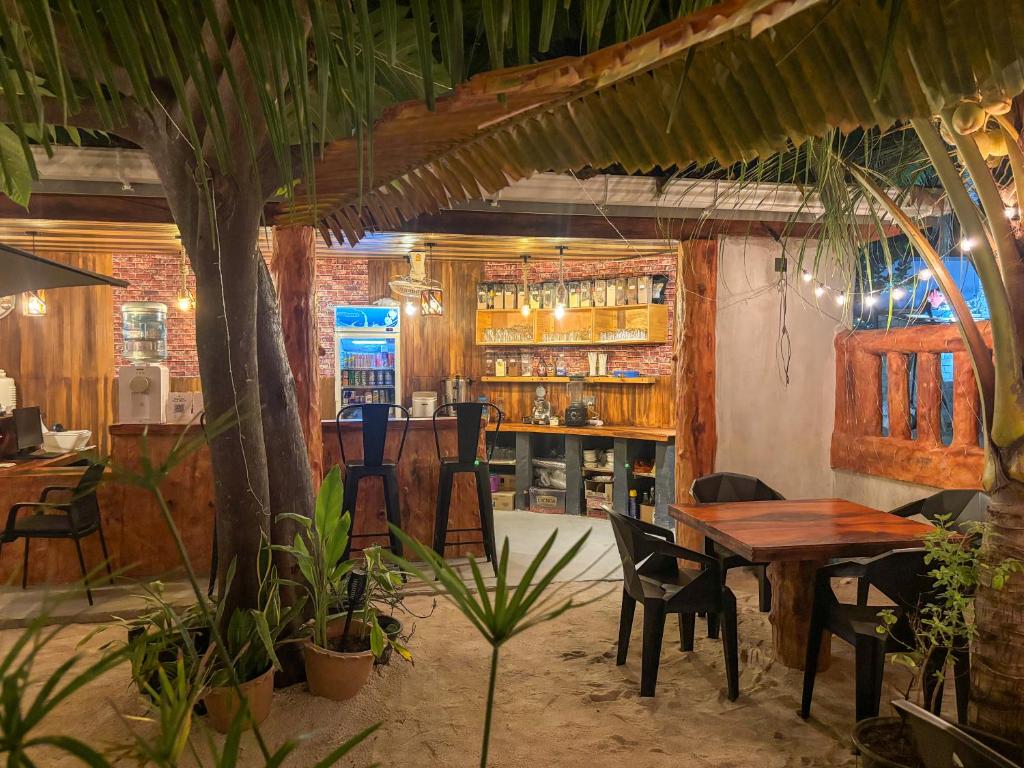
Where we stayed
Mathiveri Thundi Inn
Mathiveri
The most beautiful beaches and underwater world we've ever seen
When we think back to the Maldives, the first thing that comes to mind is the colour of the water.
That incredible turquoise, the powder-soft white sand and the crystal-clear ocean. We have seen many beautiful beaches on our travels, but the Maldives is definitely home to some of the most beautiful beaches we have ever visited.
And then there is the underwater world.
Stingrays, turtles, nurse sharks, manta rays and, with a bit of luck, even whale sharks. At some places, we didn't even have to travel far by boat to discover incredible marine life. We could already snorkel close to the islands.
As a family, this was particularly special. The kids could experience nature up close, and we shared encounters that we still talk about today.
Of course, wildlife sightings can never be guaranteed. These are wild animals, and encounters should always happen respectfully and without disturbing them.
Travelling between the islands
One of the most important things to consider when planning a trip to the Maldives is transport. Transfers between islands can quickly become expensive, but they don't have to be.
There are two main options:
Speedboats: Fast and convenient, but considerably more expensive. We paid around $50 per person.
Public ferries: Much slower, but incredibly cheap. Some journeys cost as little as $1 per person!
We combined both options during our trip.
- Malé to Omadhoo: Speedboat
- Omadhoo to Dhigurah: Public ferry
- Dhigurah to Maalhos: Public ferry
- Maalhos to Feridhoo: Public ferry
- Feridhoo to Mathiveri: Public ferry
- Mathiveri to Malé: Speedboat
Using the public ferries saved us a lot of money and was also a lovely way to travel between the islands.
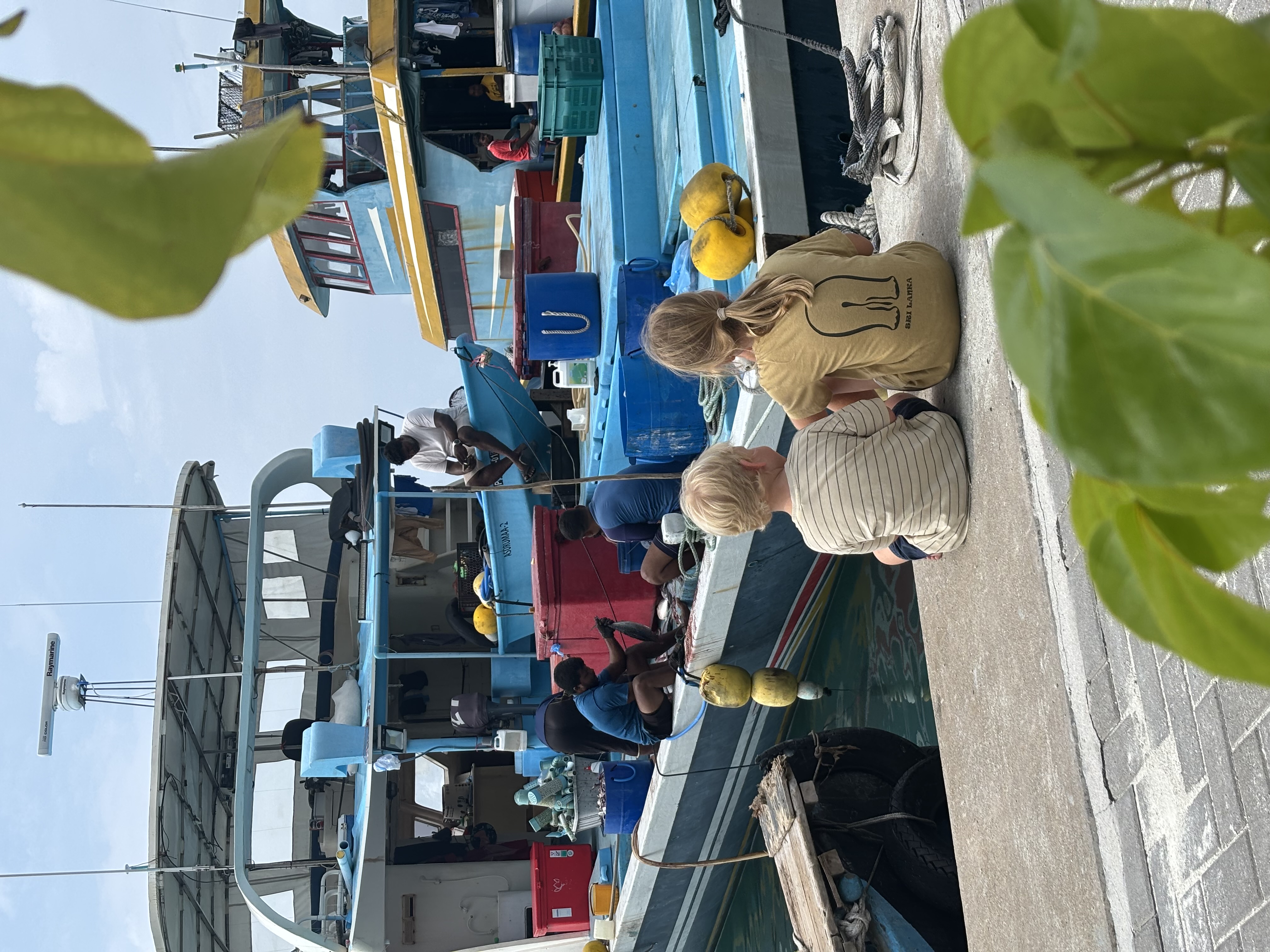
Important: Public ferries don't operate every day, and some connections can be a little complicated. You may need to change boats on another island and wait there for several hours.
For example, certain connections required us to plan a stopover in Mahibadhoo. A little planning is therefore essential. But it is absolutely worth it!
Where to find ferry schedules and book transfers
For public ferries, always check the latest schedules before travelling:
For speedboats, you can use the Odi app or simply ask your accommodation. We actually found it easier to arrange our speedboat transfers through our guesthouses.
We paid for the slower public ferries in cash directly when travelling.
Important: Arriving and departing from Malé
This is one of the most important tips we can share.
Plan your international flights carefully to allow enough time for transfers between the airport and your island.
Not all speedboats depart directly from the airport. Our speedboat to Omadhoo, for example, left from a different jetty in Malé. We first had to take a public ferry from the airport, which cost around $1 per person.
Our speedboat departed from Jetty Number 5 at the time. However, departure locations can change, so always double-check the exact jetty before travelling.
You can find the location of Jetty Number 5 here:
We recommend arriving in Malé as early as possible in the morning. This gives you the best chance of catching a speedboat to your island on the same day.
You should also leave plenty of time when travelling back. We didn't want to risk missing our international flight, so we spent our final night in Hulhumalé, close to the airport.

Where we stayed
3 BDR Luxury Apartment
Hulhumalé
Our tip: Book your international flights first. Then ask your first accommodation about speedboat connections and plan the rest of your route around the public ferry schedules. Depending on your arrival or departure time, an extra night in Malé or Hulhumalé might be necessary.
Staying connected: Saily eSIM
We sorted out mobile data before landing — this is the eSIM we used. 15% off with code 4STUFFED15
eSIM & mobile data
Saily eSIM – 15% off with code 4STUFFED15
An important tip about excursions and snorkelling trips
Something we wish we had known before travelling: There is a local arrangement whereby excursions and boat trips generally need to be organised through the accommodation where you are staying.
This can include:
- Whale shark excursions
- Manta ray trips
- Snorkelling tours
- Sandbank excursions
So you can't necessarily just choose the cheapest tour operator on the island if you're staying somewhere else.
We recommend checking which excursions your accommodation offers and comparing the prices before booking your stay. If there are certain experiences you really want to do, this can make a difference when choosing where to stay.
We were very happy with our accommodations and the excursions they organised for us.
Travelling to the Maldives with kids – are local islands family-friendly?
Absolutely! We travelled as a family of four, and the local islands were a wonderful experience for all of us.
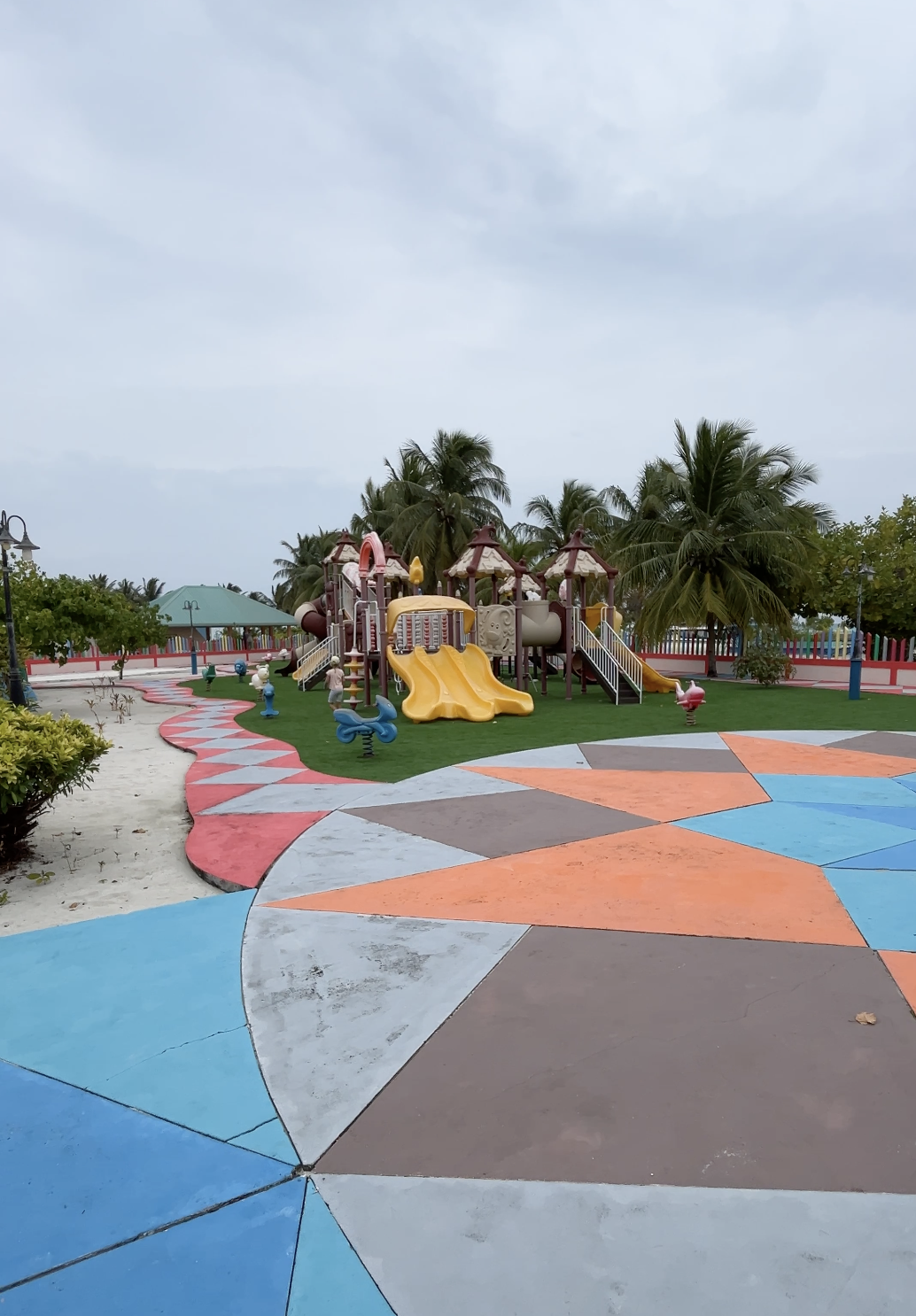
One little detail that made island life even better for the kids: every local island we visited had a playground.
It was lovely to see that the children had somewhere to play away from the beach and the water. They could run around, meet other children and enjoy a little break from all the snorkelling and swimming.
We also loved seeing how naturally children are part of everyday life on the islands. There is something special about watching local families spend time outside together in the evenings.
You shouldn't expect resort-style kids' clubs or organised children's activities. But for our family, the combination of beaches, playgrounds, nature and local island life was fantastic.
Money in the Maldives – what you should know
The local currency is the Maldivian Rufiyaa (MVR). US dollars are also widely accepted on many islands.
Our advice is to withdraw or exchange enough cash at the airport or in Malé before travelling to smaller islands.
Don't rely on finding an ATM on every island. Smaller islands have limited facilities, and many small shops and local restaurants prefer cash.
We also thought the local banknotes were beautiful. The 1,000 Rufiyaa note is particularly lovely and almost a souvenir in itself!
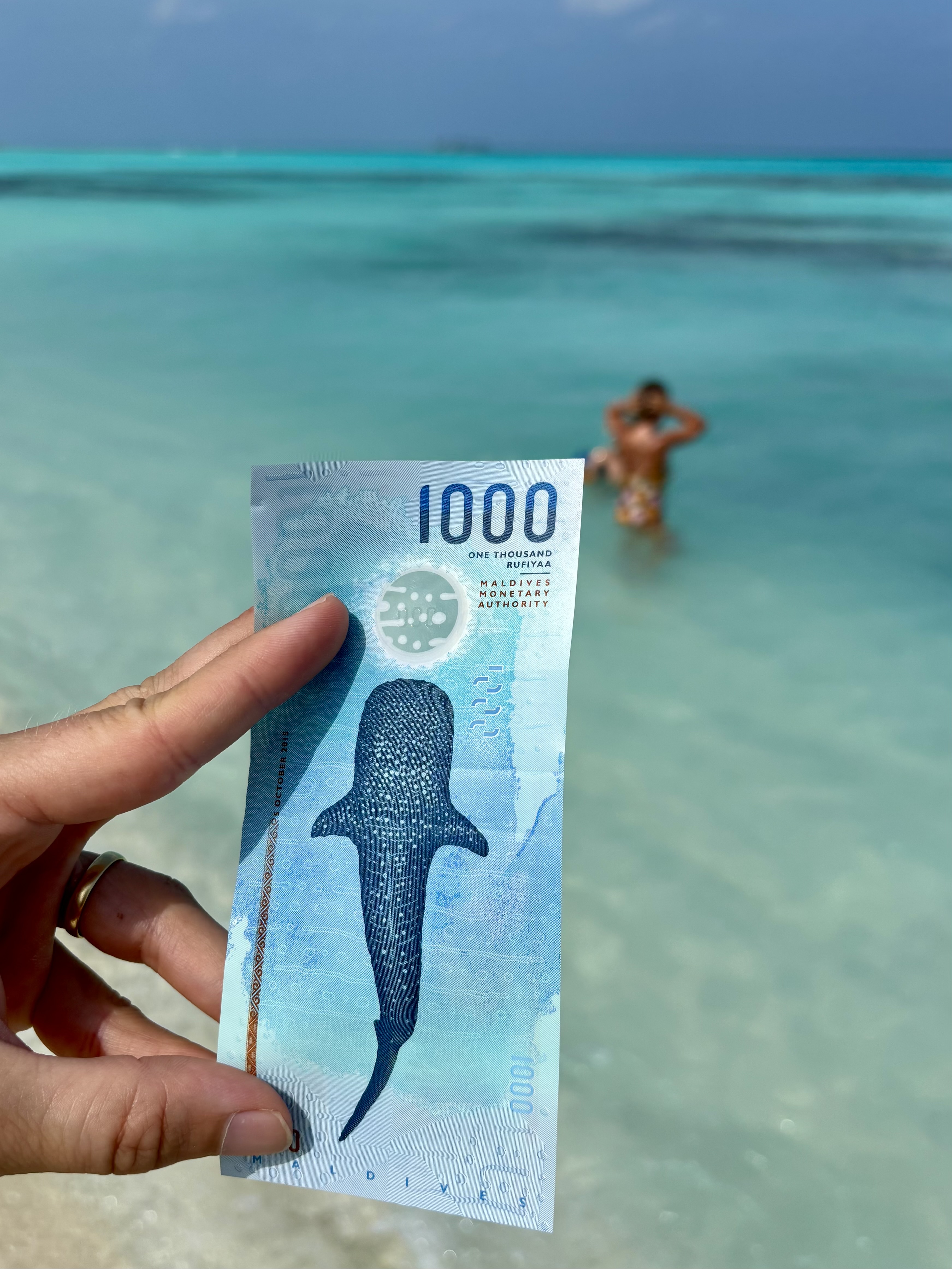
We recommend carrying some Rufiyaa as well as a little cash in US dollars. Our money tip: At Malé airport an unofficial exchange market lets you swap US dollars for Rufiyaa at a better rate than the official one — the cheapest way to get Rufiyaa.
Local food – delicious and affordable
Another lovely part of our trip was the food.
On the local islands, you'll find small restaurants and cafés where you can eat very well without spending much. Rice dishes, fish and local curries are common.
Fish is naturally a classic in the Maldives. We loved sitting down in a little local restaurant after a long day at the beach or out in the water.
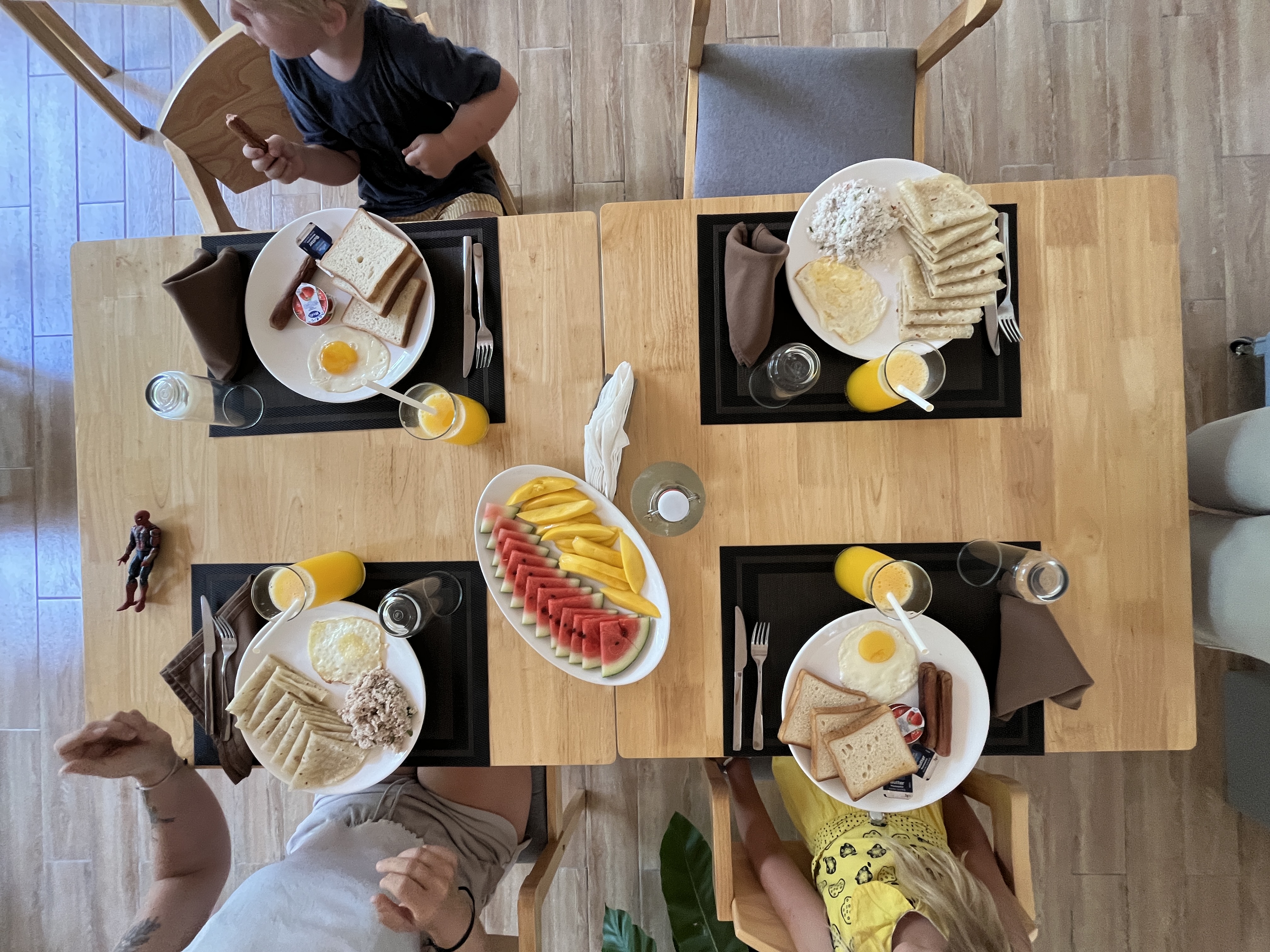
If you don't want to eat in tourist-oriented restaurants every day, local places are a great way to save money and experience a little more of the local cuisine.
Things to know before visiting local islands
The Maldives is a Muslim-majority country. There are therefore a few cultural customs and rules you should respect when visiting inhabited islands.
Bikini beaches and clothing
Bikinis and swimming shorts are generally only permitted at designated bikini beaches on local islands. Outside these areas, including in the villages, you should cover up.
Swimwear is normally fine during boat excursions and in the water. It's best to ask your accommodation where the bikini beach is and what the rules are on that particular island.
We only had one slightly uncomfortable experience during our trip. Chiara was shopping alone on Mathiveri and wearing a top that showed her shoulders. A local man approached her and asked her to cover up.
Apart from that, we didn't have any problems. It's simply important to be aware of local customs and dress respectfully.
No alcohol on local islands
Alcohol is not available on inhabited local islands. This is part of the local culture and regulations.
However, you can easily find soft drinks, mocktails and other non-alcoholic beverages.
Mosques and everyday island life
There are mosques on the islands, and you'll hear the calls to prayer in the morning and evening. Depending on where your accommodation is located, it can be a little louder around the mosque.
We quickly got used to the sounds and eventually even enjoyed hearing them as part of everyday island life.
One thing worth knowing is that much of local life takes place behind walls and in private courtyards. As a visitor, you don't always get to see much of it.
On Maalhos, however, we felt we got a little closer to everyday life. We saw women preparing fruit together outside in the evenings and men fishing around the jetty.
These are exactly the little moments that make travelling special for us.
How much did our 17 days in the Maldives cost?
We travelled as a family of four with two children and deliberately chose local accommodation and public transport wherever possible.
Our expenses for 17 days:
Total cost: approximately $2,487
Average per day: approximately $146
Family: 4 people
Duration: 17 days
For us, that was an incredible experience considering how expensive the Maldives can be.
We visited several islands, ate at local restaurants, travelled by public ferry and enjoyed numerous excursions into the underwater world.
Of course, actual costs depend on the season, accommodation, excursions and transfers. This is our personal travel budget and should be treated as a guide rather than a fixed price.
Where did we stay?
We stayed in local accommodations on all five islands.
You can find all the places we stayed at during our trip here:
See all our Maldives accommodations
If you're planning to follow our route, we'd recommend comparing accommodations early and considering which excursions and speedboat transfers they can arrange.
Would we travel the Maldives this way again?
Absolutely!
The Maldives was one of the biggest positive surprises of our travels. We experienced incredible beaches, unbelievably clear water and an underwater world unlike anything we had ever seen before.
What we loved most was that we didn't simply move from one resort to another. We got to discover several local islands, each with its own character. From the snorkelling around Omadhoo and the endless beaches of Dhigurah to the peaceful island life on Maalhos.
Of course, this kind of trip needs a little more planning than a resort holiday: ferry connections aren't always straightforward, some excursions must be organised through your accommodation, and you should respect local customs.
But for us, that was part of the adventure.
If you've always dreamed of visiting the Maldives but don't want to spend a fortune on a luxury resort, we can wholeheartedly recommend exploring the local islands. You don't have to sacrifice the most beautiful beaches just because you're travelling on a smaller budget.
And perhaps, just like us, you'll discover that the best memories aren't necessarily made in an overwater villa, but while snorkelling with your kids, exploring an almost empty sandbank or enjoying dinner in a little local restaurant.
The Maldives truly stole our hearts. 🇲🇻
More from 4stuffedbackpacks

Asia
Travel Essentials for Kids: What Our Children Actually Needed on a 10-Month World Trip
We left Switzerland with two children's backpacks full of toys — and sent most of it home after one month. Here is what our kids actually needed on a 10-month world trip.
Read more
Greece
Greece in Autumn with Kids: 10 Days of Hidden Beaches, Mountains and Wildlife in the Peloponnese
Is Greece worth visiting in autumn? We spent ten days in the Peloponnese with our two children: quiet beaches, a hidden river, golden jackals, sunsets and our favourite family tips.
Read more
Greece
Greece Travel Budget: What We Spent on 10 Days in the Peloponnese
We tracked everything on our 10 days in the Peloponnese. Flights, villa, rental car, fuel, groceries and restaurants: what a family of four really spent in Greece.
Read more